In shipping, a lot of focus is placed on what happens after delivery. Systems are installed, issues are resolved, and improvements are made over time.
But some of the most important decisions are made much earlier.

When a vessel is still at the yard, everything is accessible. Cable routes are open, infrastructure can be designed without constraints, and decisions can be made with a full view of how systems will actually be used in operation. This is where the foundation is set, not only for the installation itself, but for how the vessel will perform over time.
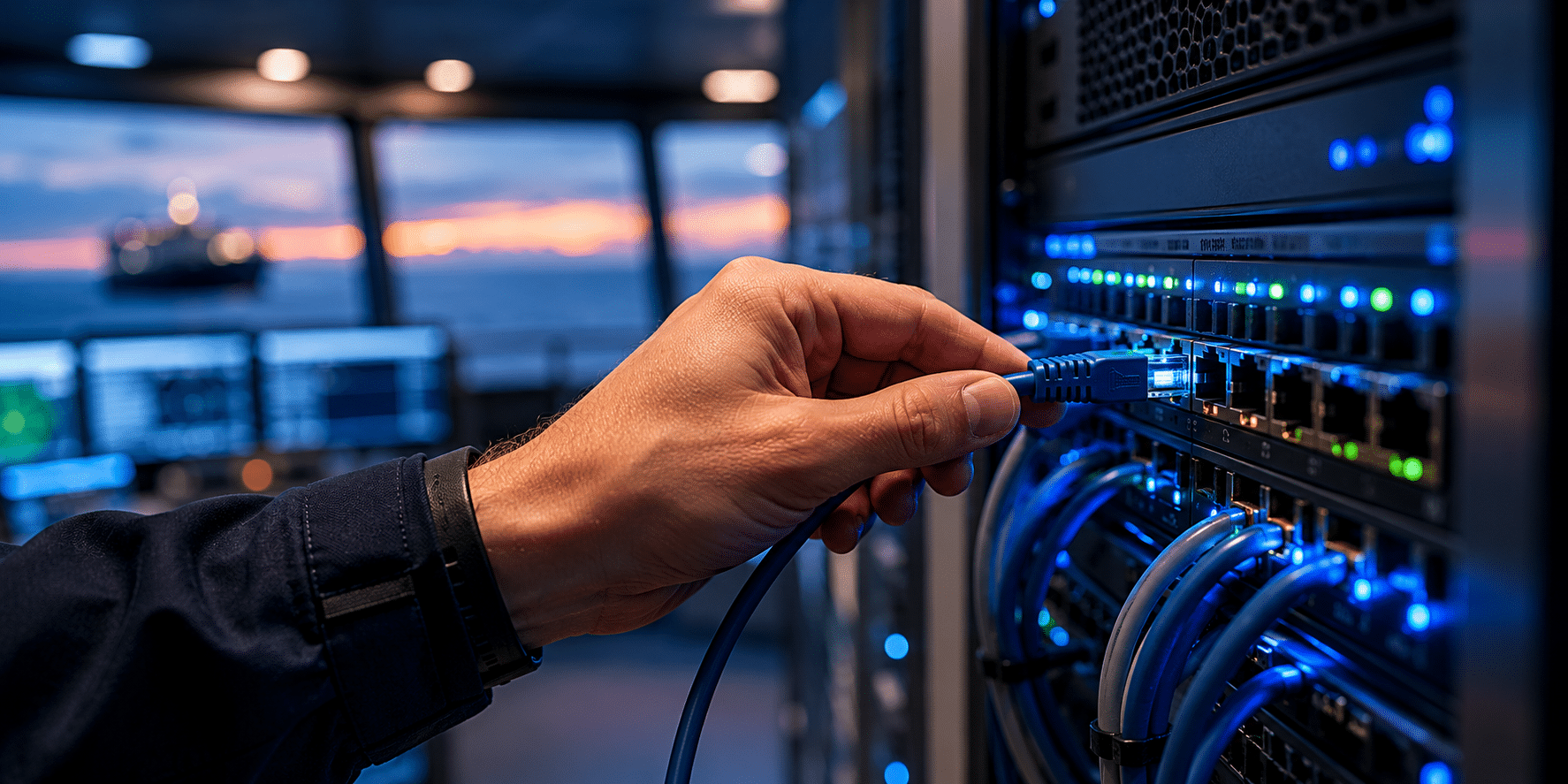
Being present early in the build phase creates a completely different set of possibilities. Instead of adapting to an existing environment, the system can be built with intention. Cable runs can be optimised, network design can be structured from the beginning, and dependencies between systems can be addressed before they become limitations. What would otherwise require workarounds later can be avoided entirely, and the result is a cleaner, more predictable environment.

The alternative is something the industry is very familiar with. Systems are installed after delivery, cabling is adjusted to fit what is already in place, and over time additional changes lead to increased complexity. What could have been a clean and structured setup becomes something that needs to be maintained, adjusted, and sometimes reworked.
Investing early is not about adding complexity. It is about removing it. A well planned and properly implemented infrastructure reduces the need for future changes, minimises disruption, and creates a stable foundation for long term operations. It also makes troubleshooting, upgrades, and lifecycle management significantly easier over time.

This week, our senior travel technician Mattias Sandberg is on site at Xiamen Shipyard in China, supporting one of our customers during the build process. The work at this stage is not about troubleshooting. It is about designing the network, planning and pulling cabling, and making sure the physical and logical infrastructure align from day one. Being present at this stage allows us to influence the outcome, not just adapt to it.
Because the most efficient cable is the one that never has to be re-routed.
And the best system design is the one that does not need to be corrected later.